Forest-Grown Thai Arabica
Orders generally ship within 1 business day. We currently ship only within the contiguous U.S., with free shipping. For a full refund, contact hello@wildnomadelephantcommons.com within 30 days of delivery. Opened bags are eligible; no return is required.
Why Canopy-Grown Matters
Most commercial coffee is grown in cleared, sun-exposed plots designed for uniformity and scale.
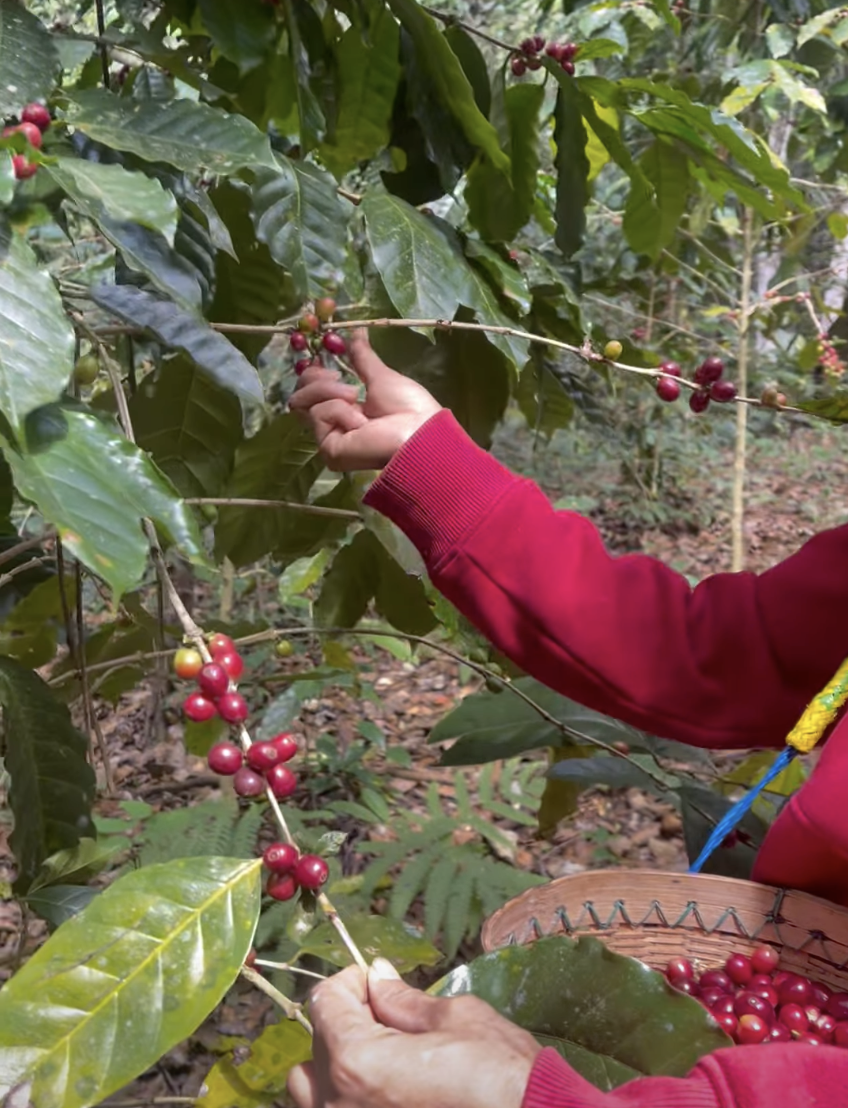
In contrast, canopy-grown coffee develops beneath native forest cover. Shade, biodiversity, and natural leaf litter support soil health, and cultivation does not rely on synthetic fertilizers or pesticides.
Slower cherry maturation can contribute to greater density and complexity in the cup.
This approach prioritizes long-term land health alongside quality.
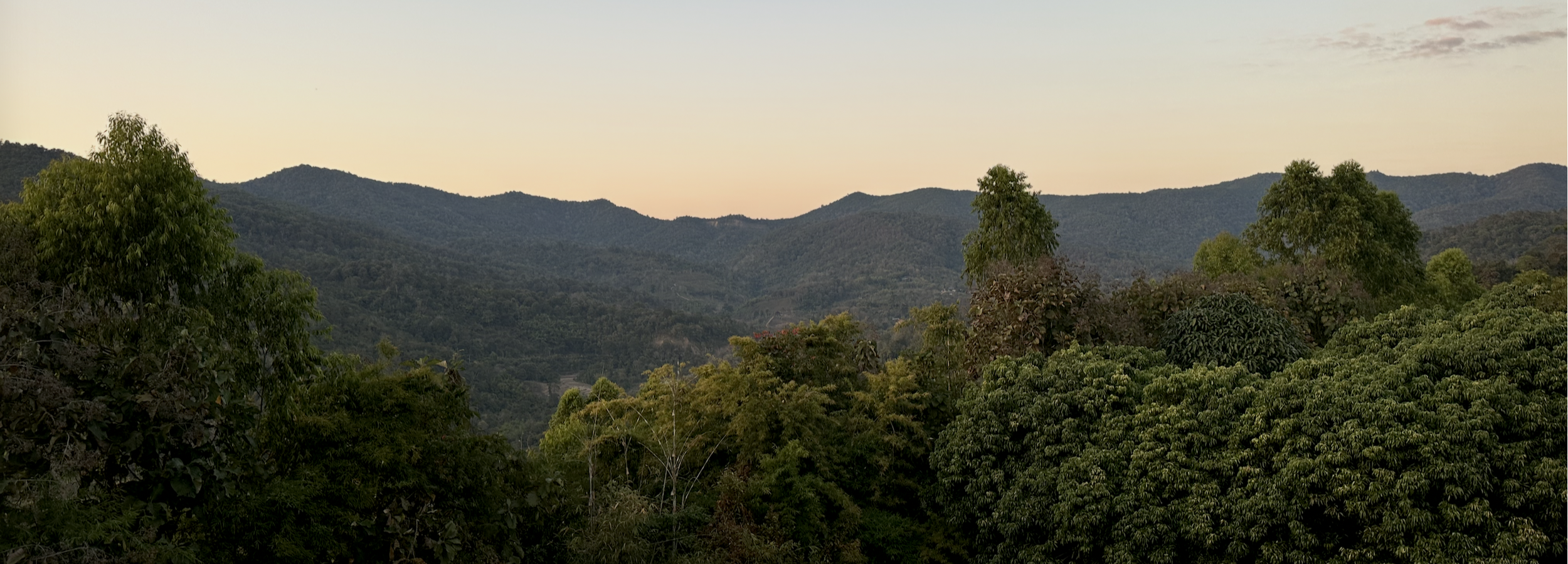
This coffee is grown by Karen farming families in Chiang Mai who have tended this forest for generations. Choosing agroforestry over clearing land for corn sustains the watershed, the soil, and the community’s long-term relationship with the jungle they live in.
This harvest represents a true community effort. Around 70 Karen families across Yo and Bee’s village each grow, harvest, mill, and dry their own beans on their individual plots within the shared forest. Yo and Bee coordinate the harvest and serve as our partners on the ground in northern Thailand, bridging the gap between these farming families and coffee lovers in the Pacific Northwest. Every family is paid 40% above the local market rate for their beans, because the value of this coffee starts at the source.