Built in Partnership at Origin
Wild Nomad Elephant Commons began not as a sourcing strategy, but as a relationship.
It began with shared time in the hills of Northern Thailand and a desire to preserve the surrounding jungle as living habitat for elephants. Over time, that relationship has grown into a long-term partnership built on land stewardship, regenerative farming, and shared vision.
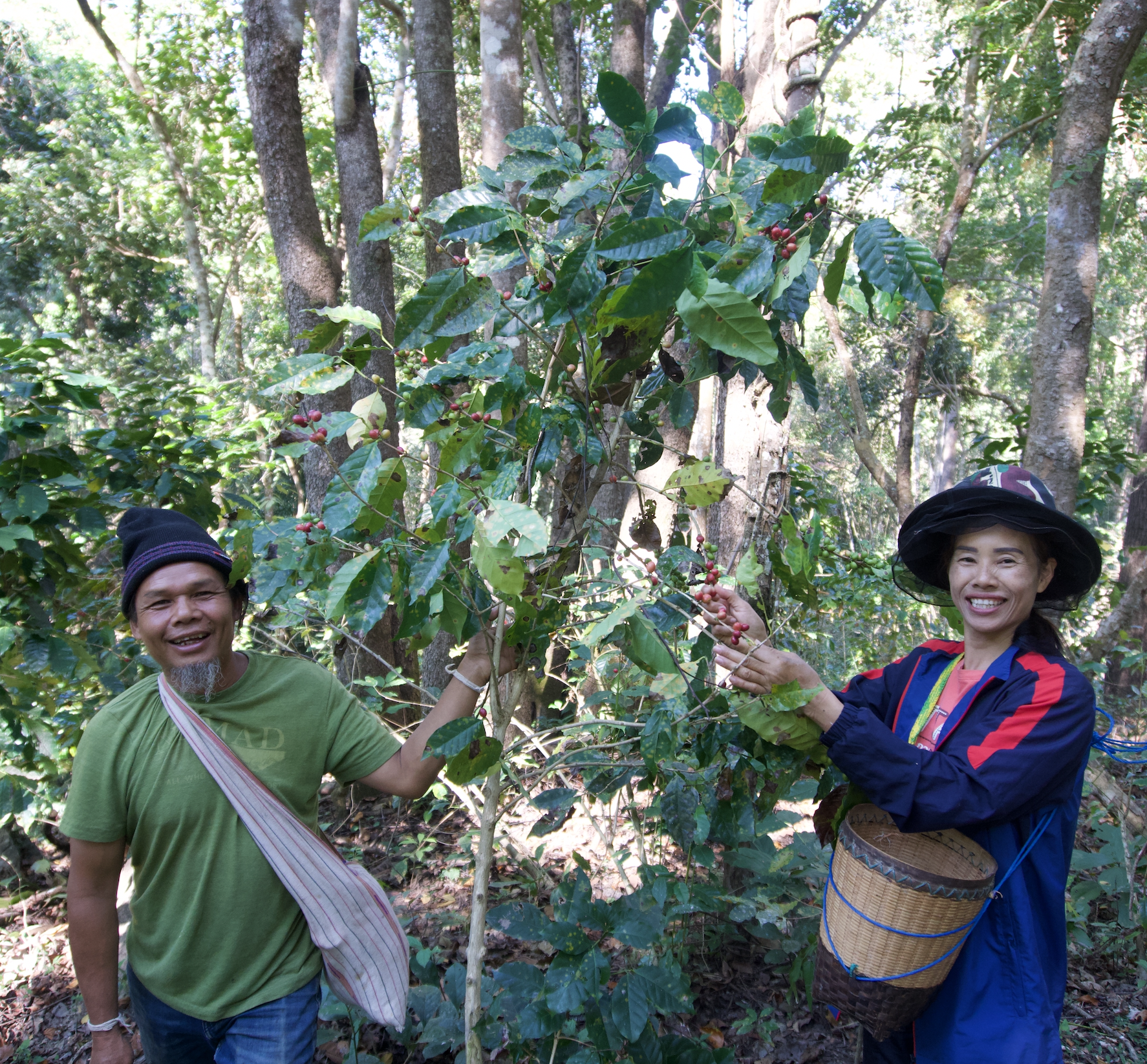
Yo and Bee
At the center of this partnership are Yo and his wife, Bee. Their family has lived and farmed in these hills for generations. The land they work sits beneath the same forest canopy we aim to protect.
When we first began spending time together in the village, coffee was not the plan. The conversation started with the forest, and with elephants. Over time, it became clear that preserving the jungle would require an agricultural model that could support families without clearing land.
For many years, corn was the primary crop. It provided income, but it also required clearing and repeated planting. Coffee offered a slower, more sustainable alternative.
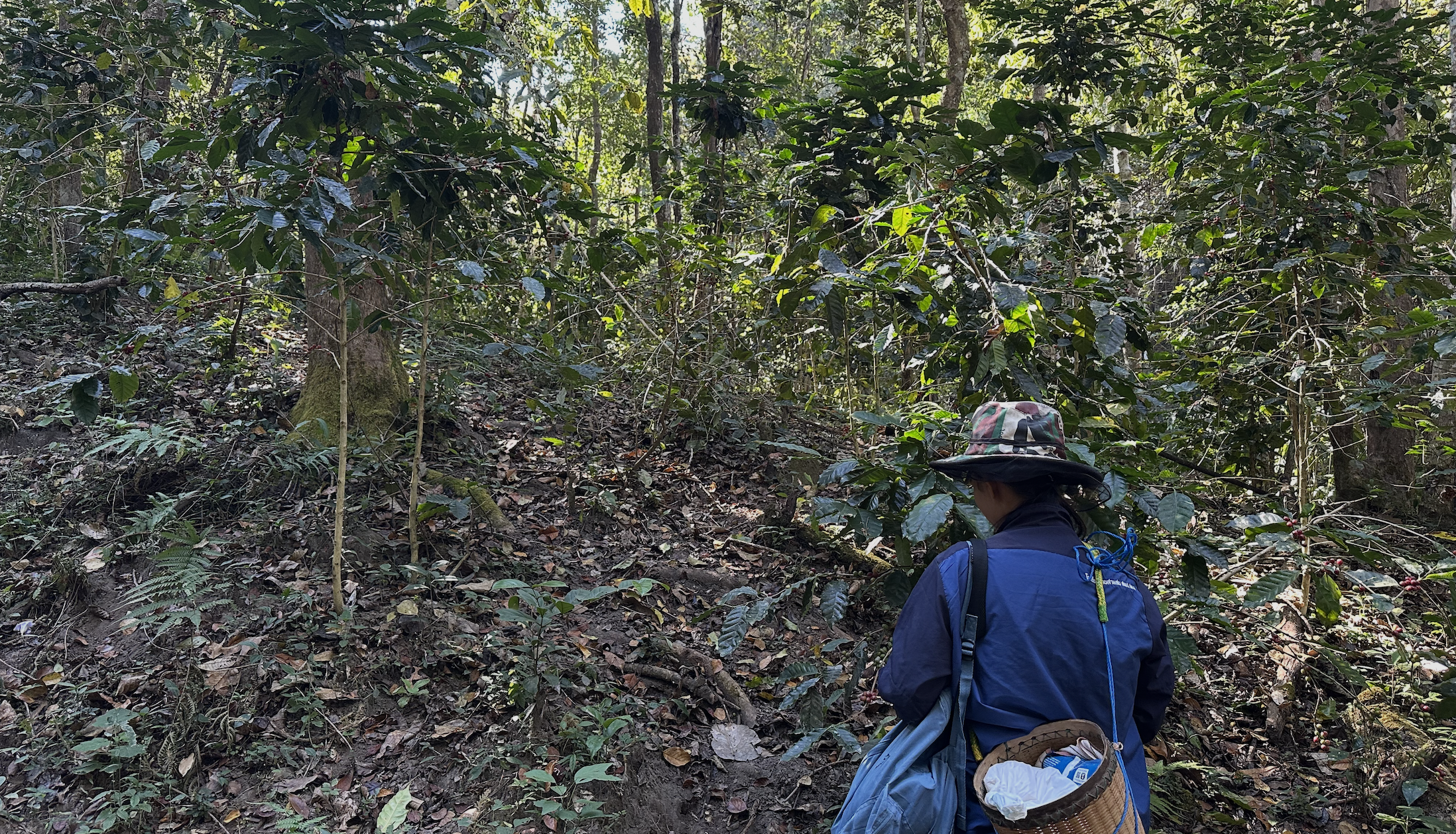
Canopy-grown coffee is planted and tended beneath the existing tree cover rather than in cleared fields. The forest canopy regulates temperature, retains moisture, and maintains the soil that sun-exposed hillsides lose over time. Coffee grown this way develops more slowly, but that's the point. The forest does the work, and the families work with it.
Today, Yo and Bee are cultivating coffee beneath the jungle canopy. Each season is a step forward. The work is practical, steady, and shared.
Yo and Bee are the anchor of this work, but they are not alone. Over 70 Karen families in the village are already involved, planting, tending, harvesting, and processing together. This is how land stewardship has always worked here: labor and knowledge shared across households, not concentrated in one. That number will keep growing.
As canopy coffee proves viable, more families have the option to transition portions of their land. The goal isn't to impose a new system, but to show that the forest standing has real economic value and that the people who have kept it standing deserve to benefit from that.